Toys that Grow with your Child: Choosing Flexible Play for Years of Use
When it comes to toys, its easy to feel like you're always one step behind your child's next stage. New interests, new abilities, new "must-haves", it can add up quickly. But the best toys aren't the ones that come in shiny packaging or promise a quick thrill; they're th eones that adapt, endure and invite imagination at every age.
Choosing flexible, open-ended toys not only saves money - it also supports your child's creativity, confidence and ability to play independently. Here's what to look for when choosing toys that truly grow with your child.
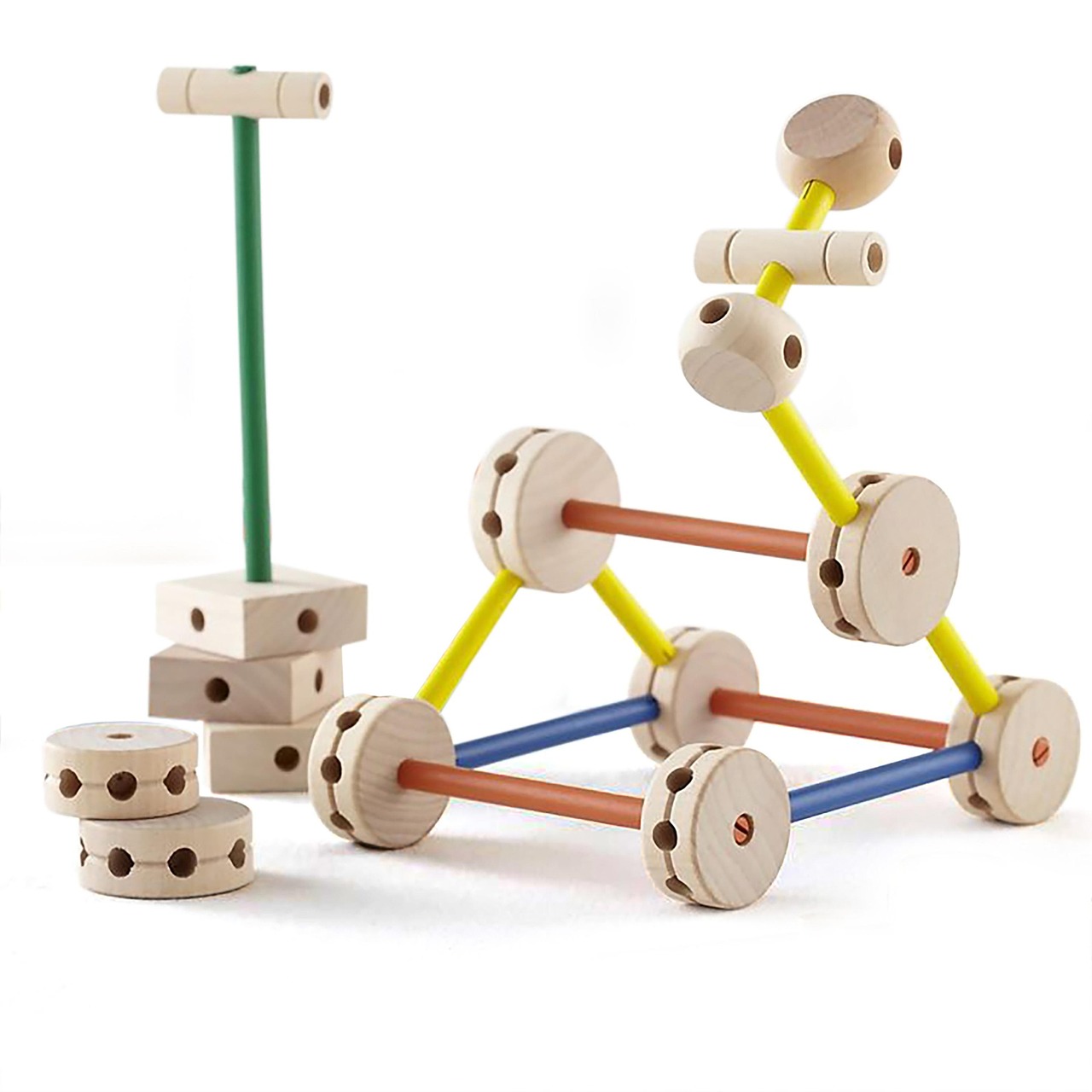
1. Look for Open-Ended Design
The most lasting toys don't have one "right" way to play.
Open-ended toys invite imagination, problem solving, and independence - and can be used differently as your child grows.
Examples:
- Blocks and fabrics that become towers, castles, zoos, forts, or roads.
- Toys that can be built and rebuilt like airtubes, trainsets, legos, modular kids couches, etc.
- Figurines, animals, or cars that blend into any story your child invents.
Why it matters: Open-ended play lets your child lead - and that's what keeps the toy interesting year after year.
2. Prioritize Simplicity Over Specificity
The simplest toys often offer the richest play. A toy that does less encourages the child to do more - think stacking cups instead of a battery powered robot.
Good questions to ask:
- Can this toy be used in more than one way?
- Will the child need to grow into it, or out of it quickly?
- Does this toy encourage movement, imagination, or problem solving?
Tip: Skip toys that do the "playing" for your child (lights, sounds, or scripted functions). Choose toys that rely on your child's creativity instead.
3. Choose Toys that Span Developmental Stages
Some toys can evolve right alongside your child's skills. Look for items that start simple and become more complex with age:
Examples:
- Building Sets: Toddlers stack blocks; preschoolers build cities; older children design patterns or marble runs
- Art Supplies: Crayons turn to makers, then watercolor sets - all stored in the same art box.
- Toy Kitchens or tool benches: Early on they're for imitation play; later they support role-playing and story telling
These toys don't become "too young" too soon - they simply adapt to new stages of imagination and understanding.
4. Favor Durability and Quality
Toys that last physically also last developmentally. Durable, well-made toys can be passed between siblings and generations, extending their value even further.
Look for:
- Sturdy, non-toxic materials like wood or thick plastic
- Smooth edges and washable surfaces
- Pieces that don't rely on replacements or batteries to stay useful
A slightly higher upfront cost can save money in the long run - and reduce cluttr from boken, forgotten toys.
5. Encourage Creativity over Collection
Marketing too often tells us that kids need more - but most children play best when they have less stuff and more space to explore.
Try this approach:
- Rotate toys every few weeks to renew interest
- Keep a small, varied set available - blocks, art materials, pretend play items, and outdoor tools.
- Focus on how toys work together: a doll can ride a block "train", or cars can drive through a blanket "mountain"
When toys serve multiple purposes, each one earns its place - and your home stays calmer and less cluttered.
6. Think Beyond the Toy Box
Toys that grow with your child don't always come from the toy store. Everyday household items can become tools for play and learning. One thing that we forget over time, is how kids really enjoy learning - we can turn every day tasks or items into play:
Ideas:
- Couch cushions and pillows serve as the building blocks for a movie fort or obstacle course
- Measuring cup and spoons become a sensory tool for water and sand play
- Food prep can provide opportunity for skill development (i.e. washing carrots, snapping beans, mashing potatoes, etc.)
Final thoughts:
Toys that grow with us are more than just money savers, they're connection builders. They encourage exploration, independence, and confidence, all while keeping play simple and sustainable.
When you choose toys that adapt and push for inspiration, you're not just buying playthings - you're creating an environment that evolves alongside your child's curiosity.
And in the long run, that's the kind of play that truly lasts.